 Oare Arene
MVP live, active development
Who Am I?
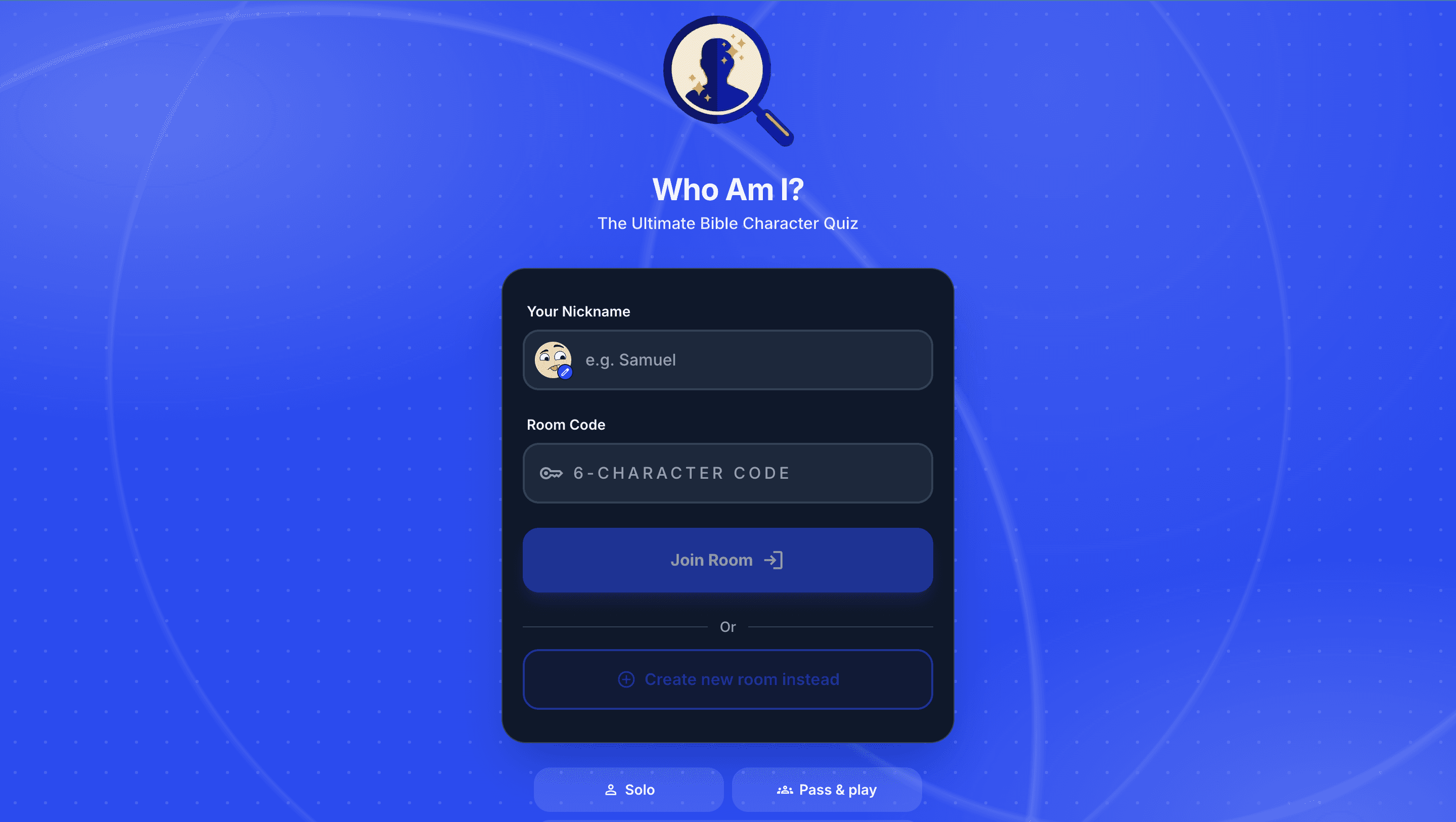
A live Bible identity quiz with solo, pass-and-play, and real-time multiplayer modes.
- Role
- Creator: research, data modeling, validation, product, and development
- Timeframe
- Long-term personal project
Problem
A good Bible identity game needs more than trivia questions. It needs consistent first-person clues, reliable Scripture references, flexible difficulty, and enough structured content to remain interesting across repeated games.
Solution
I built a browser-based MVP where players identify Bible characters and places from progressively revealed clues. A server-authoritative game loop handles rounds, timing, scoring, and reconnects, while Supabase stores the authored entities, clues, aliases, citations, and datasets. The same content API supports multiplayer, solo, and pass-and-play.
What shipped
- Private multiplayer rooms for 2 to 10 players using six-character invite codes
- Solo challenge and endurance modes, plus pass-and-play on one device
- Progressive, scripture-cited clues with easy, medium, hard, and nightmare difficulty tiers
- A separate admin PWA for managing datasets, entities, clues, publishing, and maintenance
- Lenient guess matching with alias support, typo tolerance, and an optional strict mode
Technologies
- React
- TypeScript
- Node.js
- Express
- Socket.io
- PostgreSQL
- Supabase
- Vite
- Vitest
Architecture and engineering
- An npm workspaces monorepo containing separate player, admin, and server applications
- Express and Socket.io provide server-authoritative rounds, timers, scoring, room settings, and a five-minute reconnect window
- Supabase and PostgreSQL persist authored content; active rooms and scores remain in process memory
- The player and admin PWAs deploy to Vercel, with the backend on Railway and migrations applied through GitHub Actions
- Vitest coverage spans 52 client, server, and admin test files, including rooms, scoring, validation, content operations, and maintenance
Gallery
Outcomes
- Invested hundreds of hours in researching, structuring, and validating Bible-character data.
- Built what I believe is one of the most comprehensive structured datasets of Bible characters.
- Shipped a playable MVP across three play styles with shared authored content.
- Separated the game engine from content datasets so new content packs can use the same gameplay system.
Next steps
- Complete the remaining production dataset review and content seeding.